Why Two Similar Scottsdale Homes Can Have Very Different Market Values
By Jeff Barchi | REALTOR® | RE/MAX Fine Properties
If you own a home in Scottsdale, you've probably paid attention to what nearby properties are selling for. Perhaps a neighbor recently sold their home for considerably more than you expected, or you noticed two properties with nearly identical square footage selling at surprisingly different prices. It's natural to wonder how those transactions relate to your own property's value, particularly if you've been considering selling or simply want a better understanding of your real estate investment.
I've worked in Arizona real estate since 1999, and one of the things I've learned over those years is that property values are rarely as straightforward as they appear on paper. Two homes can have the same number of bedrooms, similar floor plans, comparable square footage, and even the same original builder, yet offer very different experiences to prospective buyers. Those differences can influence both how a property is perceived and what buyers are ultimately willing to pay.
Scottsdale is an especially interesting market in this regard. Our residential communities offer a remarkable range of architecture, desert landscapes, mountain views, outdoor amenities, and neighborhood characteristics. Even within a single subdivision, homes may differ in ways that aren't immediately apparent from their listing information. Understanding those distinctions is essential to evaluating a property's current market position.
Whether you're considering selling your Scottsdale home in the coming months or simply curious about its value, it helps to understand what goes into a professional real estate market analysis, why comparable sales sometimes require careful interpretation, and which property characteristics can have the greatest influence on buyer decisions.
Understanding What Market Value Really Means
A home's market value isn't determined solely by what an owner paid for it, how much money has been invested in improvements, or what a nearby property recently sold for. Instead, it reflects the price a property would reasonably be expected to command in the current market, considering its characteristics and the available alternatives. That value is influenced by the interaction of supply, demand, financing conditions, property features, and the preferences of buyers who are actively searching within a particular price range.
This distinction is important because homeowners understandably view their properties through the lens of ownership. They remember the expense of replacing the roof, the time spent designing a kitchen renovation, or the care invested in maintaining the landscaping. Those improvements may contribute to the property's value, but buyers evaluate them in the context of other homes available for purchase. A buyer comparing several Scottsdale properties may appreciate an expensive improvement without necessarily assigning it the same financial value as its original cost.
A thorough market analysis considers both objective information and qualitative differences. Square footage, lot size, age, bedroom count, and recent sale prices provide a useful foundation, but they represent only part of the picture. Lot orientation, privacy, views, architectural design, floor-plan functionality, condition, and the quality of improvements help explain why properties with similar basic characteristics may perform differently.
Market value is also specific to a particular point in time. A home that was well positioned against competing listings six months ago may face a different set of alternatives today. New listings, completed sales, withdrawn properties, and changes in buyer activity continually influence the competitive landscape. For that reason, an evaluation prepared for general planning should be revisited when a homeowner decides to list the property.
Why Price Per Square Foot Has Limitations
Price per square foot is one of the most familiar statistics in Scottsdale real estate. It's easy to understand and can be useful when comparing properties with reasonably similar characteristics. However, it becomes much less reliable when applied broadly across different neighborhoods, architectural styles, property conditions, or lot configurations.
Consider two hypothetical homes in North Scottsdale, each offering approximately 3,500 square feet, four bedrooms, three bathrooms, and a three-car garage. Both were constructed around the same time, and both are located within the same community. Based on their basic specifications, a homeowner might reasonably assume that their values should be similar. Yet one could have an exceptional lot bordering natural desert open space, expansive mountain views, updated finishes, and newer mechanical systems, while the other has original interiors, less privacy, and equipment approaching the end of its expected service life.
Those differences can influence buyer interest substantially, even though the homes have identical square footage. Applying an average price per square foot without accounting for them would overlook much of what distinguishes one property from the other. It could also produce a misleading estimate if the neighborhood's recent sales included unusually large custom homes, smaller properties, or residences with exceptional features.
Another limitation involves the relationship between size and functionality. Additional square footage doesn't necessarily contribute equal value at every level. A thoughtfully designed 3,000-square-foot home can offer more useful living space than a larger residence with awkward room proportions, excessive hallways, or spaces that don't function well together. Buyers typically consider how the home accommodates their needs rather than calculating the value of each square foot independently.
I regularly use price-per-square-foot information as one part of a broader analysis, but I place much greater emphasis on identifying the properties a prospective buyer would realistically consider as alternatives. When the comparisons are appropriate, the resulting information becomes far more meaningful.
How Lot Location Influences Scottsdale Home Values
One of the most significant differences between otherwise similar Scottsdale homes can be found outside the house itself. A property's location within its community, its relationship to neighboring properties, and the characteristics of its land are all relevant to how buyers experience the home.
Scottsdale offers an enormous variety of residential settings. In communities such as Desert Mountain, Troon North, Desert Highlands, and McDowell Mountain Ranch, homes may occupy elevated terrain with views of mountains, rock formations, and the surrounding Sonoran Desert. In other communities, properties may overlook golf courses, landscaped common areas, neighborhood parks, or established residential streets. A home in an interior location may offer a different experience from one situated near a community entrance, along a major roadway, or beside an actively used amenity.
Even within a neighborhood where homes were constructed by the same builder, lot placement can create meaningful distinctions. Some properties enjoy considerable separation from neighboring structures, while others have more direct views into adjacent outdoor living areas. A cul-de-sac location may offer different traffic patterns from a home positioned along a through street. Corner lots, irregular parcels, and elevated sites can introduce both opportunities and practical considerations.
When evaluating lot characteristics, I also look beyond total parcel size. A larger lot doesn't always provide more usable outdoor space, particularly in areas where natural desert terrain, drainage areas, slopes, easements, or building restrictions affect how the land can be used. A smaller, level lot with a beautifully designed backyard may offer practical advantages over a larger parcel with substantial unusable terrain. Conversely, a buyer seeking extensive natural desert surroundings may place particular value on a property with a more expansive setting.
There isn't a universal formula that assigns a fixed premium to each lot characteristic. The value of those differences depends on the property, the neighborhood, and how they compare with sold comps as well as other available homes.
The Value of Views, Privacy, and Outdoor Living
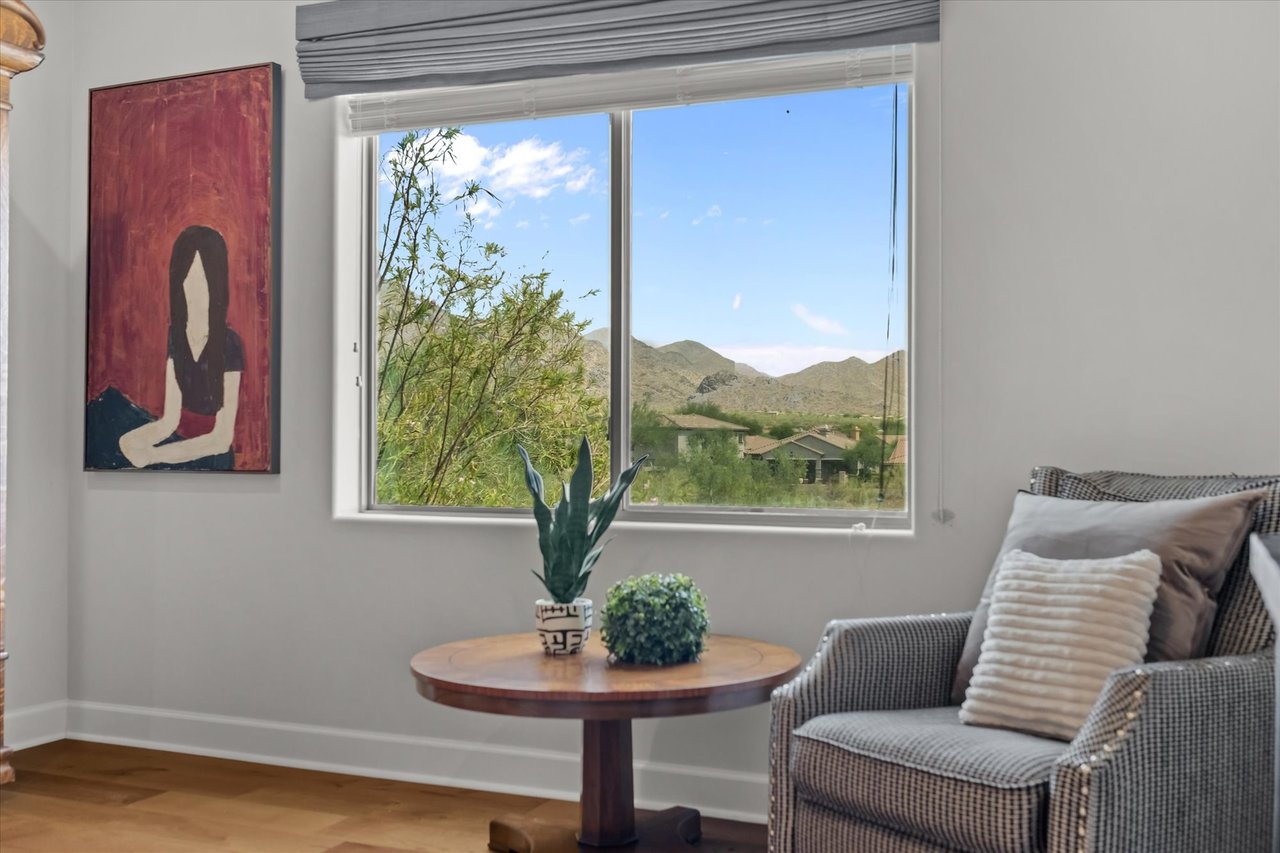
Mountain views are among the features most closely associated with Scottsdale real estate, particularly in North Scottsdale and the communities surrounding the McDowell Mountains. However, not every mountain view is equivalent, and the presence of a view doesn't automatically establish a specific increase in value.
A property with panoramic scenery visible from the great room, kitchen, primary suite, and outdoor entertaining areas may provide a distinctly different experience from a home where the mountains can be seen only from a particular window or corner of the backyard. The orientation of the view, surrounding development, available outdoor seating areas, and architectural design all affect how prominently the scenery contributes to the property.
Privacy deserves similar consideration. Buyers may appreciate a backyard that feels comfortably separated from neighboring properties, especially when the outdoor space includes a pool, spa, dining area, or patio designed for regular use. Landscaping, walls, changes in elevation, and the placement of adjacent homes can all influence that sense of privacy. In some situations, modest landscaping changes can improve screening; in others, the relationship between neighboring structures is a permanent characteristic of the lot.
Outdoor living is particularly relevant in Scottsdale because patios, pools, courtyards, and landscaped spaces are often integral components of a home's design. A well-maintained outdoor area that connects naturally with the interior may be more appealing than one with expensive features that are poorly arranged or difficult to maintain. Shade, exposure to afternoon sun, access from the kitchen or great room, and the usability of gathering areas are all practical considerations.
These features can distinguish properties in ways that aren't captured by online estimates or basic listing statistics. Their influence on value should be evaluated through relevant comparable sales and current buyer competition rather than assumptions about what every buyer will prefer.
Why a Home's Orientation Matters in Arizona
The direction a home faces can affect natural light, outdoor comfort, and how different rooms function throughout the day. In Scottsdale, where summer temperatures make shade and sun exposure particularly relevant, orientation is worth evaluating carefully.
For example, a backyard receiving substantial afternoon sunlight may offer appealing sunset views while requiring more shade to make certain outdoor areas comfortable during warmer months. Another property may provide naturally shaded patios at particular times of day but have a different relationship to the surrounding scenery. Covered patios, landscaping, roof overhangs, window design, and outdoor structures can influence these conditions considerably.
Orientation also affects the interior experience. Large windows can bring natural light into living spaces and create strong visual connections to the outdoors. Depending on their location and design, those same windows may affect afternoon heat gain or require appropriate shading. The placement of windows, neighboring structures, and landscaping can make two homes with similar floor plans feel noticeably different.
I don't assume that one orientation is universally preferable. Some buyers place greater importance on sunsets or natural light, while others prioritize shaded outdoor spaces or particular views. The role of a Realtor is to understand these distinctions and evaluate how they relate to the property and the alternatives available in the market.
For sellers, orientation can also influence how a home is presented. Photography scheduled when the rooms receive favorable natural light may better communicate the property's architectural features. Outdoor areas should be photographed and shown in ways that accurately represent their setting and functionality. Thoughtful presentation helps prospective buyers recognize qualities that may otherwise be overlooked.
Floor Plans: Why Functionality Can Matter More Than Size
One of the most interesting aspects of comparing Scottsdale homes is how dramatically different two residences can feel despite having the same square footage. Architectural design, ceiling heights, room proportions, window placement, and the relationship between living spaces all influence the experience of a property.
Consider a home with an open great room connected to the kitchen and outdoor patio. The layout may provide convenient circulation and make the living areas feel connected. Another property of the same size might offer separate formal living and dining rooms, a den, and a more traditional kitchen arrangement. These layouts serve different preferences, and their relative appeal depends on the needs of the buyers considering them.
The arrangement of bedrooms can be equally important. A split floor plan may offer separation between the primary suite and other bedrooms, while a home with multiple ensuite bedrooms provides a different configuration of privacy and convenience. Dedicated offices, bonus rooms, lofts, and flexible living areas can contribute to functionality, particularly when their purpose is clear and the rooms are proportioned appropriately.
Ceiling heights and architectural details also influence perception. A smaller room with generous windows, well-placed doors, and an attractive ceiling design may feel more inviting than a larger room with limited natural light. Hallways, staircases, storage areas, and the relationship between interior and exterior spaces can affect how efficiently the home uses its overall square footage.
These characteristics are among the reasons that comparing properties requires more than matching bedroom counts and approximate living area. When selecting comparable sales, I consider whether the homes offer similar functionality and architectural experiences. When marketing a property, I also want prospective buyers to understand its layout clearly through accurate descriptions, photographs, and available floor-plan information.
Understanding the Difference Between Maintenance and Renovation
Homeowners frequently ask whether updates increase their property's value and, if so, how much. The answer depends on the type of improvement, the condition of the home before the work, the cost of the project, and the expectations of buyers in the relevant market segment.
It's useful to distinguish between maintenance, cosmetic updates, and major renovations. Maintenance generally involves keeping existing systems and features in proper operating condition. Cosmetic improvements change the appearance of the property without necessarily altering its fundamental design. Major renovations may involve substantial changes to kitchens, bathrooms, floor plans, outdoor areas, or architectural components.
Each category contributes differently to the ownership experience. Replacing a failing air-conditioning system addresses functionality and may reduce uncertainty about a significant component. Updating worn flooring can improve appearance and continuity throughout the interior. Remodeling a kitchen may enhance functionality and design, but the financial return depends partly on how the finished result compares with the preferences of a particular buyer.
A homeowner who spends a substantial amount on renovations shouldn't automatically assume the full cost has been added to the property's market value. Some improvements may be highly personalized, while others are already expected within a particular price range. Buyers may also place different values on individual features depending on their own priorities.
Documentation can be helpful when evaluating improvements. Permits, warranties, contractor information, service records, and approximate completion dates give prospective buyers additional context. They can also help a Realtor distinguish completed work from original features when reviewing comparable properties.
The central question isn't simply whether a home has been updated, but whether those updates improve its position relative to the alternatives buyers are considering.
Why the Age and Condition of Major Systems Matter
When homeowners think about property value, visible finishes often receive the most attention. However, the condition of major mechanical and structural components can also affect a buyer's evaluation.
In Scottsdale, air-conditioning equipment is particularly important because it is essential to comfortable year-round occupancy. Roofing, plumbing, water heaters, electrical components, pool equipment, and irrigation systems are other areas that can influence a property's anticipated maintenance responsibilities.
A home with attractive finishes may still present concerns if major systems are aging or have known problems. Conversely, a property with an older interior may have been exceptionally well maintained and include recently serviced or replaced equipment. Neither situation should be evaluated solely by appearance.
The age of a system is useful information, but age alone doesn't establish whether it is functioning properly. Professional inspections, maintenance records, and qualified contractor evaluations provide more meaningful information about actual condition. A newer system may still have problems, and an older system may continue to operate effectively with appropriate care.
From a seller's perspective, maintaining good records can be valuable. Receipts for significant repairs, documentation of routine service, and information about warranties can help buyers understand the property's history. These records don't eliminate the need for independent inspections, but they provide helpful context.
When evaluating market value, I consider the home's condition in relation to comparable properties. A major system replacement may not produce a dollar-for-dollar increase in sale price, but differences in maintenance and expected future expenses can influence negotiations and buyer decisions.
Why Architectural Style and Design Consistency Matter
Scottsdale offers an impressive range of architectural styles, including contemporary desert homes, Southwestern residences, Mediterranean-inspired properties, traditional designs, and custom homes that incorporate several influences. Each style has features that contribute to its character, and those features should be considered when evaluating a property's condition and improvements.
An important consideration is whether updates complement the original architecture. A contemporary home with clean lines and expansive glass may benefit from finishes that emphasize those characteristics. A traditional or Mediterranean-inspired property may be better served by improvements that retain its distinctive materials, proportions, and architectural details.
Renovating a home doesn't necessarily mean making it resemble the newest construction. In some cases, original architectural features are among the property's strongest characteristics. Removing those details without considering the design as a whole can result in a less cohesive interior.
Consistency matters as well. If adjoining rooms have very different flooring, lighting styles, cabinetry finishes, or wall colors, the home may feel less unified even when individual materials are attractive. Thoughtful updates generally work best when they respect the property's architecture and create continuity between spaces.
This is particularly relevant in higher-priced Scottsdale properties, where the quality of finishes and attention to detail can affect buyer expectations. The market doesn't necessarily reward the newest design trend, especially when it conflicts with the home's character. Understanding which features are distinctive, which improvements are appropriate, and how the property compares with similar architecture can help sellers avoid unnecessary expenses.
Why Neighborhood-Specific Knowledge Is Essential in Scottsdale
Scottsdale isn't one uniform housing market. Property characteristics, residential amenities, price ranges, and buyer competition can differ substantially between communities, sometimes within a relatively small geographic area.
In DC Ranch, for example, the neighborhood and the particular property setting can be important elements of a valuation. The community includes a range of architecture, lot configurations, and residential environments. Comparing two properties requires understanding those distinctions as well as their condition, improvements, and association-related considerations.
Desert Mountain presents different considerations because custom architecture, elevation, terrain, views, and individual property features can vary widely. Club membership arrangements and community requirements may also be relevant to a buyer's decision and should be verified for the specific property. A general community-wide average is unlikely to capture every distinction between individual residences.
Windgate Ranch provides examples of how properties with similar original designs can become more differentiated over time. Owners may make changes to outdoor entertaining areas, mechanical systems, flooring, kitchens, and other features. Lot orientation, privacy, views, the number of levels within the home, and the relationship to surrounding open space may further distinguish homes within the community.
In Grayhawk and McDowell Mountain Ranch, the differences between individual neighborhoods, lot locations, home configurations, and available amenities can also influence how buyers compare properties.
The same principle extends to Scottsdale Ranch, McCormick Ranch, Troon, Desert Highlands, Old Town Scottsdale, and other areas. Each has its own housing characteristics, and property comparisons should reflect the specific homes that compete with one another.
This is one of the reasons I place so much importance on neighborhood-specific market knowledge. Understanding the name of a community is useful, but understanding the details of its properties and its history is what makes a valuation more meaningful.
How Professional Comparable-Sales Analysis Works
A comparable-market analysis begins by identifying properties that provide relevant evidence of value. Recent closed sales are an important component because they show prices at which transactions actually occurred. However, the process also involves examining active listings, pending transactions when reliable information is available, and properties that have been withdrawn or have experienced extended marketing periods.
Selecting the right properties is often more important than selecting a certain number of them. A sale with similar square footage but substantially different lot characteristics may be less useful than one with a somewhat different size but a more comparable setting, architecture, and condition. The analysis should account for the relationship between the properties rather than treating every nearby sale as equally relevant.
Once appropriate comparisons are selected, the differences need to be evaluated. Lot characteristics, views, renovations, functional layout, maintenance, and other features may help explain why prices vary. Adjustments should be supported by market evidence whenever possible, and the final conclusion should reflect the available information rather than a predetermined number.
Sale circumstances, such as seller concessions, also deserve consideration. Publicly displayed information doesn't always contain every detail needed to understand a transaction completely.
A well-prepared analysis should therefore do more than produce a single figure. It should explain the relevant comparisons, identify the home's distinguishing characteristics, and establish a reasonable range supported by the market. That information helps homeowners understand the basis for a valuation and make decisions about pricing, improvements, and timing.
The Difference Between Closed Sales and Active Competition
Recent closed sales provide important evidence, but homeowners preparing to sell should also understand the properties currently available to buyers.
Imagine that several comparable Scottsdale homes sold during the previous three months. Those transactions help establish a historical reference point. Now suppose that several new properties enter the market with updated interiors, attractive lots, and competitive asking prices. Buyers searching today have a different selection than those who purchased during the earlier period.
Active listings don't establish final market value because asking prices aren't completed transactions. Nevertheless, they help illustrate the alternatives a buyer will encounter when comparing properties. If similar homes are currently available at lower asking prices or offer substantially better features, that competition may affect buyer interest in a new listing.
Pending sales can also provide helpful context, although the final negotiated terms may not be known until a transaction closes. The time properties spend on the market, the frequency of asking-price adjustments, and the volume of competing listings can all contribute to understanding current conditions.
I believe effective pricing requires attention to both what has sold and what buyers can purchase now. The historical evidence provides a foundation, while current competition helps determine how the subject property should be positioned when it enters the market.
That distinction becomes especially important when someone uses a valuation completed several months earlier to establish a listing price. Conditions may have changed enough that the analysis needs to be refreshed before the property is offered for sale.
Why Online Home-Valuation Estimates Can Be Misleading
Automated home-value estimates are convenient, and I understand why homeowners use them. Within seconds, they can provide an approximate value based on available property information and statistical models. They can also introduce homeowners to recent neighborhood sales and general market trends.
However, an automated estimate isn't the same as a detailed evaluation of an individual Scottsdale home. The quality of the result depends on the available data, the characteristics of the properties used for comparison, and the model's ability to account for differences.
A system may recognize the home's recorded size, age, and location but have incomplete information about a kitchen renovation, the condition of its mechanical equipment, or the quality of its views. It may not fully appreciate whether the lot backs to natural desert open space, whether the floor plan has been substantially altered, or whether the property has deferred maintenance.
Automated estimates can be particularly challenging for custom homes and neighborhoods where properties vary significantly. In a community containing homes with similar designs and conditions, statistical comparisons may be more straightforward. In an area with distinctive architecture, unusual lots, or relatively few comparable transactions, the uncertainty may be greater.
County assessor values should also be understood in context. Arizona's property-tax valuation framework serves a different purpose from determining the current price a buyer might pay for an individual residence. A tax-related value shouldn't automatically be treated as a current resale valuation.
I encourage homeowners to view automated estimates as background information rather than a final conclusion. They can provide a starting point for questions, but the next step is examining the property itself and the market evidence that best reflects its individual characteristics.
How Buyer Financing and Transaction Terms Can Affect a Sale
The price stated in a purchase contract is important, but other transaction terms can also influence the seller's outcome and the reliability of the agreement.
For example, an offer may include requests for closing-cost concessions, particular personal property, or other negotiated arrangements. Financing terms, contingencies, and the buyer's ability to complete the transaction are additional considerations.
Two offers with the same purchase price may therefore produce different net proceeds or involve different levels of uncertainty. A seller needs to understand those distinctions when evaluating proposals.
Financing and appraisal considerations may also become relevant. When a buyer is using mortgage financing, the lender's appraisal process may assess whether the property supports the transaction value. Appraisers use their own professional methods and standards, and their conclusions aren't necessarily identical to a Realtor's market analysis.
For properties with unusual features, strong documentation of relevant comparable sales, improvements, and property characteristics may help communicate information accurately. That doesn't guarantee an appraisal result, but it reinforces the importance of understanding and documenting what distinguishes a home.
A successful transaction involves more than agreeing on a price. The terms of the contract, the property's condition, and the parties' ability to meet their obligations all contribute to whether the sale reaches closing.
Why Some Scottsdale Homes Attract Buyers More Quickly Than Others
Homeowners sometimes assume that a property attracting immediate interest must be underpriced or that one remaining on the market longer must have a serious problem. Neither conclusion is necessarily accurate.
The number of potential buyers can vary substantially by property type and price range. A home with a widely appealing floor plan and a price aligned with competing listings may attract a broader group of interested purchasers. A highly customized luxury residence may appeal to a smaller number of buyers seeking particular architectural or property characteristics.
Presentation, availability for showings, accurate listing information, and the relationship between asking price and competition can also influence activity. Homes that are difficult to view or poorly represented online may receive less attention than their physical characteristics would otherwise justify.
The first several weeks of a listing can provide useful information about buyer response. Showing activity, inquiries, and feedback may reveal whether buyers recognize the property's strengths and understand its pricing. However, isolated comments shouldn't automatically prompt significant changes. It is more useful to identify patterns and evaluate them alongside current market conditions.
Time on market is one consideration, not a complete explanation of value. A property may require additional exposure because of its unusual characteristics, while another may attract a suitable buyer quickly. The important question is whether the marketing, presentation, and price remain appropriate for the property and its competition.
The Relationship Between Asking Price and Market Value
Setting an asking price involves judgment. It should be informed by comparable sales and current competition, but it also needs to consider the property's characteristics and the seller's objectives.
An asking price is not a declaration of what buyers must pay. It is part of the property's positioning in the market. Buyers evaluate it against their expectations, available alternatives, and their own financial circumstances.
One consideration is how prospective buyers search online. Many real estate websites allow users to set minimum and maximum price ranges. A home priced just above a commonly selected threshold may be excluded from searches that would otherwise include it. That doesn't mean sellers should automatically price below those thresholds, but search behavior is one of several factors worth evaluating.
Another consideration is the relationship between price and perceived condition. A property priced similarly to extensively updated competing homes may need particularly strong advantages in location, lot, architecture, or other features to support its position. Conversely, a home with exceptional characteristics may justify a different approach from a conventional property in the same subdivision.
The highest recent neighborhood sale isn't automatically the best starting point. It may involve features the subject property doesn't offer, or circumstances that make it less comparable. The goal is to establish a thoughtful strategy based on the actual evidence, not simply select the most encouraging number.
How to Evaluate Improvements Before Selling
One of the most practical uses of a professional market analysis is helping homeowners decide whether improvements are worthwhile before listing.
Suppose a seller is considering replacing flooring throughout the house. Before undertaking the project, it's useful to compare the home's current condition with competing listings. If similar properties with existing flooring are attracting buyers and selling successfully, extensive replacement may not be necessary. If flooring condition is substantially below what buyers are encountering elsewhere, targeted improvements might be worth considering.
The same reasoning applies to kitchens, bathrooms, lighting, paint, landscaping, and outdoor living areas. Costs, timing, the home's architectural style, and the likely effect on marketability should all enter the discussion. An improvement that helps one property compete may be unnecessary or financially impractical for another.
Maintenance issues deserve separate attention. Known defects, malfunctioning equipment, and other property concerns may need professional evaluation regardless of whether cosmetic upgrades are planned. Sellers should also understand applicable disclosure responsibilities and avoid assuming that improvements eliminate the need to disclose known material conditions.
I prefer to evaluate proposed spending in the context of the seller's goals. Some owners want to minimize preparation expenses, while others are comfortable investing in improvements that may enhance the presentation. There isn't one approach that fits every home, and the best decision may involve balancing potential benefits against time, cost, and uncertainty.
What Homeowners Should Understand About Scottsdale Market Trends
Scottsdale real estate market reports often discuss median sale prices, average prices, inventory, days on market, and other statistical measures. These figures can be useful, but they need to be interpreted carefully.
For example, an increase in the median sale price doesn't necessarily mean every Scottsdale home has appreciated by the same percentage. The median can change because the mix of properties selling has changed. If more expensive homes account for a larger share of transactions during one period, the reported median may rise even when values within individual neighborhoods remain relatively stable.
Inventory figures require similar context. An increase in available homes across Scottsdale doesn't necessarily mean every subdivision or price range has experienced the same change. Buyer demand for a condominium near Old Town may behave differently from demand for a large custom property in North Scottsdale.
Days-on-market statistics can also vary by property type and price range. Higher-priced or highly specialized homes may have smaller pools of potential buyers, while properties offering more conventional characteristics may attract different levels of activity.
I encourage homeowners to use market reports as a way to understand the broader environment while recognizing that a property-specific analysis provides more relevant information for an individual selling decision.
Current conditions should be reviewed when a homeowner is ready to list. Market reports are valuable context, but they shouldn't replace an evaluation of recent transactions and the properties buyers are considering at that particular time.
Why the Right Local Realtor Makes a Difference
Understanding Scottsdale home values requires a combination of market research, property knowledge, and experience interpreting differences between homes.
A Realtor should be able to explain how comparable sales were selected, why certain properties are more relevant than others, and how the subject home differs from its competition. The conversation should include the property's condition, setting, architectural characteristics, and recent market activity, along with any preparation decisions that may influence the selling strategy.
For homeowners in Scottsdale's luxury and master-planned communities, familiarity with individual neighborhoods can be particularly helpful. A property in Desert Mountain may require a different approach from one in DC Ranch, Windgate Ranch, or McCormick Ranch. Even within those communities, the most relevant comparisons may depend on the particular lot, layout, and improvements.
I've been an Arizona REALTOR® since 1999 and have participated in more than 1,300 real estate sales. Throughout that experience, I've found that the most useful advice comes from understanding the individual property and the client's goals rather than applying a standard recommendation to every situation.
My approach is to help homeowners understand the evidence supporting their property's market position, identify factors that may affect buyer interest, and make decisions based on practical information. Whether someone intends to sell immediately or is simply planning ahead, that clarity can be valuable.
Frequently Asked Questions About Scottsdale Home Values
How can I find out what my Scottsdale home is worth?
A property-specific market analysis is a useful starting point. It should consider recent comparable sales, active competing listings, property condition, lot characteristics, improvements, and current buyer activity. Online estimates can provide general background, but they may not account for important differences between individual homes. Speaking with a qualified and experienced Realtor with a track record in your community can provide a more realistic valuation of what your home could sell for today.
Why did my neighbor's home sell for more than mine might be worth?
Differences in lot placement, views, privacy, updates, mechanical condition, floor plan, or transaction circumstances may explain the difference. The neighboring property may also have sold under different market conditions. A meaningful comparison examines the actual characteristics and sale terms rather than relying solely on proximity or square footage.
Do renovations increase a home's value by the amount spent?
Not necessarily. Buyers may recognize the benefits of renovations without assigning them the same dollar value as their cost. The impact depends on the quality, functionality, design, competing properties, and buyer expectations. Some improvements may be worthwhile primarily because they enhance the homeowner's enjoyment rather than produce a corresponding increase in resale value.
Are mountain views always worth more?
Mountain views can contribute to buyer appeal, but their market influence depends on quality, visibility, permanence, surrounding conditions, and comparable sales. A panoramic view enjoyed from several living areas may be different from a limited view available only from one location. Any potential premium should be supported by relevant market evidence.
How often should I update my home valuation?
If you're actively preparing to sell, the analysis should be updated close to the intended listing date. If you're simply monitoring your property's value, the appropriate frequency depends on your goals and whether significant market or property changes have occurred. A valuation is a snapshot of conditions at a particular time, not a permanent conclusion.
Understanding the Value of Your Scottsdale Home
Every Scottsdale property has a combination of characteristics that influences how buyers compare it with other available homes. Some of those qualities are easy to identify, such as square footage or recent renovations. Others, including lot placement, views, privacy, floor-plan functionality, and the relationship between the home and its surroundings, require closer consideration.
That's why I believe homeowners deserve more than a generalized estimate or a simple comparison with the house next door. A useful valuation should explain the evidence, identify meaningful differences, and provide a realistic understanding of where the property fits within its market.
If you've been wondering what your Scottsdale home may be worth, whether you're in DC Ranch, Desert Mountain, Windgate Ranch, Troon North, Grayhawk, McDowell Mountain Ranch, Scottsdale Ranch, or another area, I'd be happy to help you explore the details.
Choosing an experienced Realtor who understands your specific neighborhood can make an important difference in how your property's value is evaluated and how a future selling strategy is developed.
Call or text me, Jeff Barchi, at 602-558-5200. Let's take a closer look at the features that distinguish your home and the market information relevant to your property.